• Blog
  • Lab Testing
  • Bioaugmentation Applications
  • Useful Information
  • About Us
BIOLOGICAL WASTE TREATMENT EXPERT
Contact Us

Non-filamentous bulking is much more common than you think

4/4/2024

 
Picture
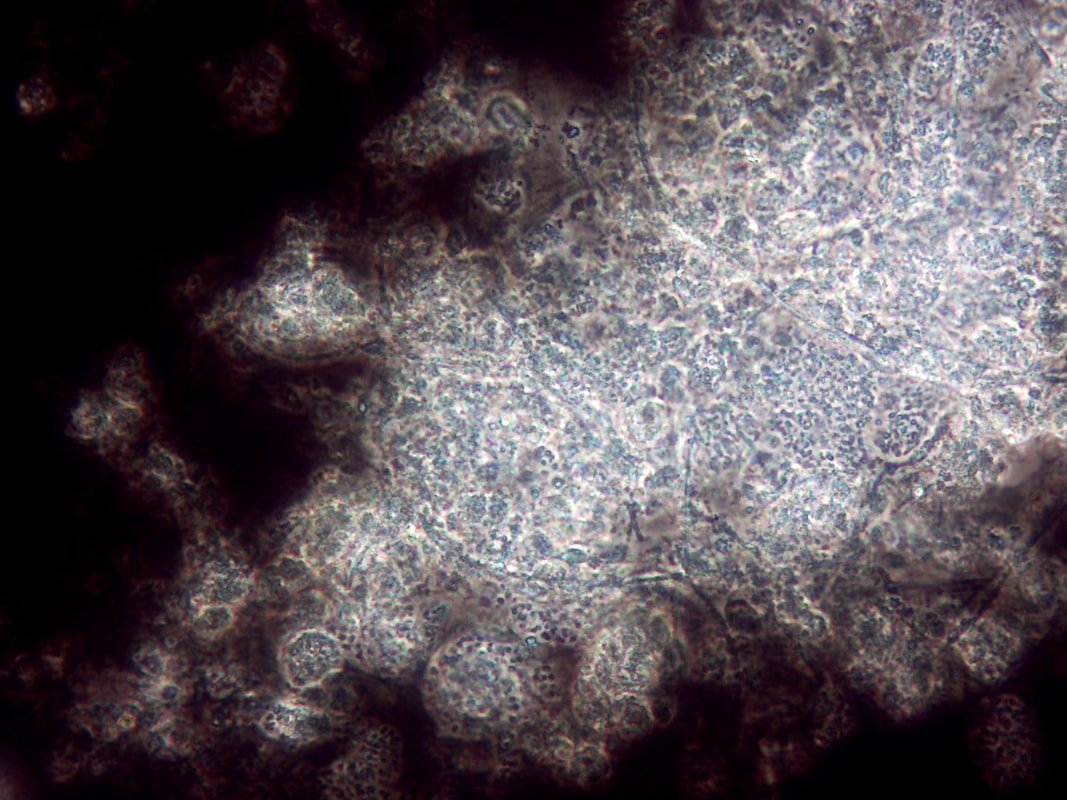
Non-filamentous bulking in wastewater treatment plants (WWTPs) can be a challenging issue, affecting the quality of the final effluent. In the photo above, note the rounded colonies that appear to have more "gel" between the cells - these are high EPS zones. Also, the above photo is using India Ink. The carbon particles in the ink do no penetrate high EPS floc which proves that you have excess EPS and non-filamentous bulking. Let’s explore strategies for controlling this phenomenon:
  1. Understanding Non-Filamentous Bulking:
    • Filamentous bulking occurs due to excessive growth of filamentous bacteria in WWTPs.
    • Ideally, there should be a balance between filamentous bacteria and floc-forming bacteria.
    • In moderate amounts, filamentous bacteria contribute to AS settle-ability by providing a structural base for robust floc formation.
  2. The Role of EPS (Extracellular Polymeric Substances):
    • EPS is crucial for floc formation in suspended growth and biofilms.
    • It consists of polysaccharides, proteins, nucleic acids, and metabolic byproducts.
    • EPS protects cells and accumulates nutrients (N, P, metals).
    • Proper EPS levels are essential for solids removal and phosphate removal.
  3. The Transition to Excess EPS:
    • Excess EPS leads to problems:
      • Waste solids retain more bound water.
      • Dewatering becomes difficult.
      • Secondary clarifiers may have floating scum and poor compaction.
    • Major contributors to non-filamentous bulking:
      • Thauera: Common in industrial activated sludge.
      • Zooglea: More common in domestic wastewater.
      • Azoarcus: Less common but efficient denitrifiers.
  4. Control Strategies:
    • Nutrient Adjustment:
      • Turn up nutrients (N or P) if not already optimal. If C:N:P ratio is in the target zone, adding additional nutrients will not help with bulking.
    • Waste Solids Management:
      • Remove excess EPS through waste activated sludge (WAS).
      • Be cautious as it increases the F/M ratio.
    • Bioaugmentation:
      • Increases viable microorganisms in the mixed liquor suspended solids (MLSS) breaking bottlenecks created by overgrowth of high EPS producing organisms.
      • Aster Bio has identified and produced cultures having the ability to degrade EPS via extra-cellular enzymes and form beneficial capsular polymers that function much like chemical cationic coagulants.
  5. Monitoring and Early Detection:
    • Use molecular tests including qPCR to detect changes in Zooglea populations.
    • Look for signs of increased soluble BOD loadings at the influent.
Remember that effective control strategies require a combination of traditional and innovative approaches.

Comments are closed.

    Author

    Erik Rumbaugh has been involved in biological waste treatment for over 20 years. He has worked with industrial and municipal wastewater  facilities to ensure optimal performance of their treatment systems. He is a founder of Aster Bio (www.asterbio.com) specializing in biological waste treatment.

    View my profile on LinkedIn

    RSS Feed

    Click to set custom HTML

    Archives

    September 2025
    August 2025
    July 2025
    June 2025
    May 2025
    April 2025
    March 2025
    February 2025
    January 2025
    December 2024
    November 2024
    October 2024
    April 2024
    March 2024
    February 2024
    December 2023
    September 2023
    August 2023
    July 2023
    June 2023
    May 2023
    April 2023
    February 2023
    January 2023
    December 2022
    November 2022
    October 2022
    September 2022
    August 2022
    June 2022
    May 2022
    March 2022
    February 2022
    January 2022
    November 2021
    October 2021
    September 2021
    August 2021
    June 2021
    April 2021
    March 2021
    February 2021
    December 2020
    November 2020
    October 2020
    September 2020
    August 2020
    July 2020
    June 2020
    May 2020
    April 2020
    March 2020
    February 2020
    January 2020
    December 2019
    November 2019
    October 2019
    September 2019
    August 2019
    July 2019
    June 2019
    May 2019
    April 2019
    March 2019
    February 2019
    January 2019
    December 2018
    November 2018
    October 2018
    September 2018
    August 2018
    July 2018
    June 2018
    May 2018
    April 2018
    March 2018
    February 2018
    January 2018
    December 2017
    November 2017
    October 2017
    September 2017
    August 2017
    July 2017
    June 2017
    May 2017
    April 2017
    March 2017
    February 2017
    January 2017
    December 2016
    November 2016
    October 2016
    September 2016
    August 2016
    July 2016
    June 2016
    May 2016
    April 2016
    March 2016
    February 2016
    January 2016
    December 2015
    November 2015
    October 2015
    September 2015
    August 2015
    July 2015
    June 2015
    May 2015
    April 2015
    March 2015
    February 2015
    January 2015
    December 2014
    November 2014
    October 2014
    September 2014
    August 2014
    July 2014
    June 2014
    May 2014
    April 2014
    March 2014
    February 2014

    This website uses marketing and tracking technologies. Opting out of this will opt you out of all cookies, except for those needed to run the website. Note that some products may not work as well without tracking cookies.

    Opt Out of Cookies
Proudly powered by Weebly
Photos from Picturepest, marcoverch, perzonseowebbyra, Picturepest, Picturepest, dsearls, dungodung, Massachusetts Office of Travel & Tourism, aqua.mech, vastateparksstaff, hile, Aaron Volkening, amishsteve, Neil DeMaster, mklwong88, KOMUnews, Picturepest, kaibara87, Bernd Thaller